
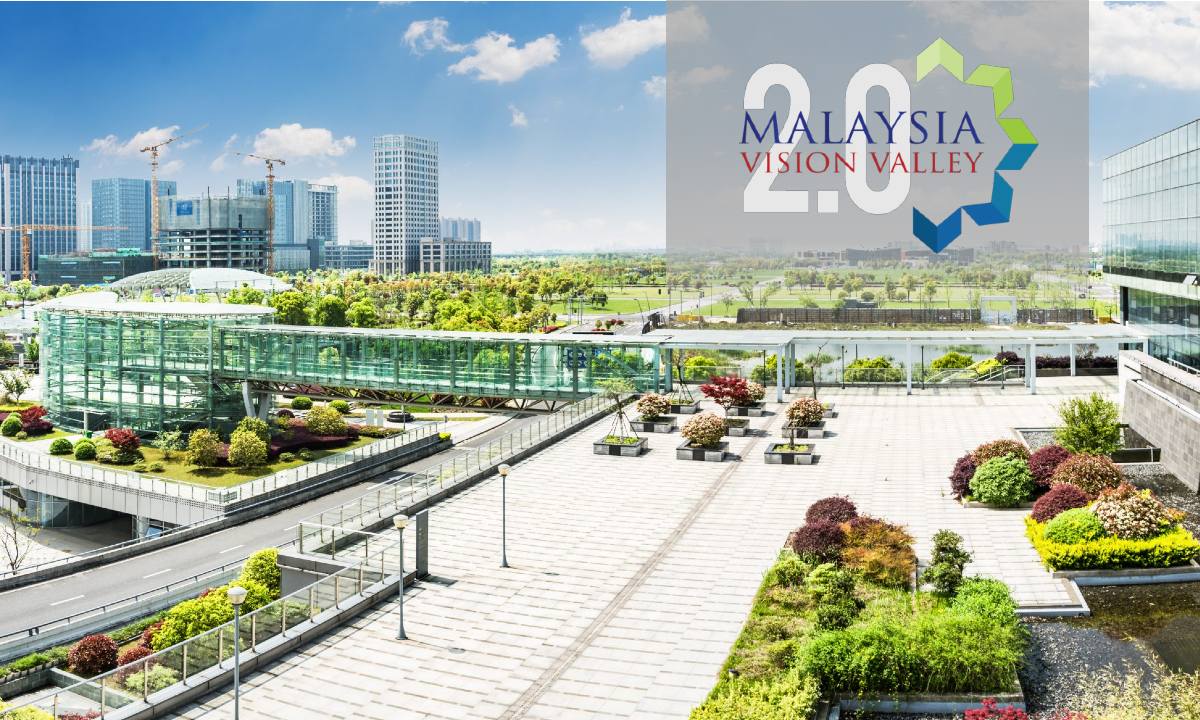

ASEAN investors are choosing Malaysia Vision Valley (MVV) because of its location at the nexus of Malaysia’s RM426.7 billion record investment pipeline, a proven semiconductor and EV battery cluster anchored by Samsung SDI’s RM7 billion facility, and industrial land prices still 30-50% below Klang Valley — with freehold tenure and state-backed approval timelines of 14 months.
TL;DR
- Malaysia broke investment records in 2025 with RM426.7 billion approved — manufacturing attracted RM131.3 billion across 1,354 projects.
- MVV 2.0 is a 38,558-acre nationally backed industrial corridor in Negeri Sembilan, 15 minutes from KLIA, with freehold land from RM70–80 psf.
- Anchor tenants already committed: Samsung SDI (RM7B EV battery plant), Hunan Yuneng (RM560M new energy materials), onsemi, NXP, Nexperia, Nestlé.
- Industrial land in MVV 2.0 is priced 30–50% below established Klang Valley corridors — representing early-corridor entry before full repricing.
- Hartamas Real Estate covers multiple MVV 2.0 parks without developer ties — book a no-cost consultation to match your investment profile.
What Is Malaysia Vision Valley 2.0 and Why Does It Matter for Industrial Investors?
Malaysia Vision Valley 2.0 (MVV 2.0) is a 38,558-acre nationally designated economic development corridor in Negeri Sembilan, positioned between Kuala Lumpur and Seremban. The corridor is divided into six parcels spanning tech parks, aerospace, halal manufacturing, and a smart container port — all connected via the Nilai-Labu-Enstek Expressway (NLE) and the Elite Highway, with KLIA accessible within 15 kilometres.
For industrial property investors across ASEAN, MVV 2.0 represents a timing opportunity structurally similar to Iskandar Malaysia in Johor at its early phase. Industry participants and property analysts have noted that industrial land in Iskandar transacted at estimated levels of RM8–RM15 per square foot in its early development phase around 2010; comparable established Johor corridor properties now command RM45–RM80 psf. MVV 2.0’s current pricing — RM70–RM80 psf freehold for premium industrial land — precedes the corridor’s full repricing, which is already underway as anchor MNCs confirm their footprints.
What Investment Data Supports MVV 2.0 as a Credible Industrial Corridor?
Malaysia’s total approved investments reached a record RM426.7 billion in 2025, representing an 11% increase year-on-year, according to MIDA’s March 2026 report. The manufacturing sector alone attracted RM131.3 billion across 1,354 approved projects. Foreign investments grew 20.9% to RM207.1 billion — with China (RM35.8B), Singapore (RM52.7B), and the US (RM11.3B) leading sources.
| Metric | 2025 Data | Source |
|---|---|---|
| Total approved investments | RM426.7 billion (record) | MIDA, March 2026 |
| Manufacturing FDI growth | +13.1% year-on-year | MIDA, March 2026 |
| China investments in Malaysia (Jan–Sep 2025) | RM35.8 billion | MIDA, November 2025 |
| Q4 2025 FDI inflows | RM27.82 billion (record quarter) | BNM / Trading Economics |
| MVV approved FDI (2019–2024) | RM24.1 billion | NS Corporation |
| Samsung SDI EV battery facility | RM7 billion committed | Official announcement |
| New jobs from approved projects | 244,902 | MIDA, March 2026 |
| Manufacturing projects realised | 84.9% of approvals | MIDA, March 2026 |
Which Anchor Tenants Are Already Operating in MVV 2.0 That Signal Confidence?
The strength of an industrial corridor is measured not by developer promises but by the names already operating within it. In the MVV 2.0 corridor and its established surrounding districts, the following companies are confirmed operational:
- Semiconductors and electronics: onsemi (On Semiconductor), NXP Semiconductors, Nexperia, TDK-Lambda, Samsung SDI — all established in the Senawang / Tuanku Jaafar Industrial Park belt
- Consumer and food manufacturing: Nestlé (world’s largest Milo production facility in Chembong), Coca-Cola, Dutch Lady, Ajinomoto, Kellogg’s, Hino Motors — in Bandar Enstek and surrounds
- New energy sector: Samsung SDI Energy Malaysia (RM7B EV battery cell plant — Malaysia’s first EV battery cell facility and Samsung SDI’s first production site in Southeast Asia, est. 1991), Hunan Yuneng New Energy (RM560M LFP cathode plant, SPD Tech Valley)
- Aerospace: Safran Landing Systems — in the corridor’s aerospace manufacturing zone
This tenant profile is significant for investors: anchor MNCs generate Tier 1 and Tier 2 supply chain pull, filling industrial space in proximity with component and service suppliers. Every Samsung SDI-scale investment creates structured demand for 5–15 secondary facilities nearby.
What Are the Key Industrial Park Options Within MVV 2.0 for ASEAN Investors?
| Park / Developer | Key Features | Land / Unit Type | Sector Focus |
|---|---|---|---|
| Eco Business Park 7 (EcoWorld + SD Guthrie + NS Corp) | 1,195 acres, freehold · KLIA < 15km · 14-month approval | Semi-D from RM3M; land from RM75–80 psf | Advanced manufacturing, logistics, clean tech |
| Hamilton Nilai City | Stratified industrial, transit-adjacent | Semi-D and detached | Light to medium manufacturing |
| SPD Tech Valley | NS state-linked, new energy focus | Industrial land and BTS | New energy, battery materials |
| Bandar Enstek (TH Properties) | Established food/FMCG cluster, halal-capable | Built factory and land | Food, consumer goods, halal |
| XME Business Park | Lower price point, flexible tenure | Semi-D and terrace factory | SME manufacturing |
What Returns Can Industrial Property Investors Expect in the MVV 2.0 Corridor?
Industrial property in Malaysia has consistently outperformed residential as an investment class. Industrial tenants sign 3–5 year leases, install capital equipment, and build supply chains anchored to their physical address — creating significantly lower vacancy and turnover than residential. Key return drivers in MVV 2.0:
- Gross rental yield: Based on Hartamas Industrial Division’s transaction history, well-positioned industrial properties in developing corridors in Malaysia have delivered gross rental yields in the range of 5–7% — though yields vary significantly by asset type, location, and lease terms
- Capital appreciation: The land price gap between MVV 2.0 (RM70–80 psf) and established Klang Valley corridors (RM120–180 psf) represents early-stage positioning before full corridor repricing
- 13th Malaysia Plan (2026–2030): The new national plan explicitly continues corridor development funding, providing policy continuity
- New Incentive Framework (NIF) effective March 2026: Outcome-based investment incentives replacing 200+ legacy schemes — simplified and more attractive for MNC commitments
Why Is Now the Right Entry Timing for MVV 2.0 Industrial Property?
Three compounding factors converge in 2026 to create an entry window that will close as the corridor matures:
- Price gap before repricing. The RM70–80 psf freehold pricing in MVV 2.0 compares to RM120–180 psf in Klang Valley industrial parks. As anchor tenants commission their plants and announce operations (2026–2028), corridor repricing follows 12–24 months behind. The investors who entered Iskandar before Legoland, Premium Outlets, and Pinewood announced capture the appreciation arc.
- Infrastructure commissioning cycle. The NLE expressway expansion, grid upgrades, and Phase 1 completions of Samsung SDI and SPD Tech Valley facilities create the physical evidence that de-risks late-stage concerns about corridor credibility.
- Global supply chain realignment. US-China trade tensions and tariff escalation are driving manufacturing diversification away from single-country dependency. Malaysia — neutral, ASEAN-embedded, with 50 years of semiconductor infrastructure — is structurally positioned as the primary beneficiary of this shift in Southeast Asia.
Is MVV 2.0 industrial land a safe investment compared to Klang Valley?
MVV 2.0 industrial land carries higher corridor-stage risk than established Klang Valley parks but offers significantly stronger capital appreciation potential. The corridor is state-backed (NS Corporation), supported by RM24.1 billion in approved FDI since 2019, and has confirmed MNC anchor tenants. The appropriate investor profile is one with a 5-7 year hold horizon and tolerance for early-stage corridor positioning.
How Does Hartamas Real Estate Support ASEAN Industrial Property Investors in MVV 2.0?
Hartamas Real Estate has been placing industrial tenants and investors in Malaysia since 1996, with cumulative project marketing sales exceeding RM8 billion. The Industrial Division has placed clients including Shopee, Lazada, Huawei, Kerry Logistics, Mr DIY, and Caring Pharmacy across industrial properties in Malaysia.
Hartamas is not tied to a single developer in the MVV 2.0 corridor. This cross-corridor independence means recommendations are based on fit, not inventory. When EBP 7 is right, Hartamas recommends EBP 7. When Hamilton or SPD Tech Valley better matches a client’s profile, cash flow timeline, or regulatory requirements — that is the recommendation.
Services Hartamas coordinates for industrial investors: property matching and transaction, company incorporation, MIDA licensing and regulatory applications, legal and due diligence support, construction management for BTS projects.
- Consultation: No-cost, no-pressure personalised session matched to investment profile and horizon
- Multi-developer access: EBP 7, Hamilton, SPD Tech Valley, Bandar Enstek and others
- Transaction support: From LOI to full SPA — industrial-specific expertise
- Post-acquisition: Tenant sourcing, asset management, regulatory compliance